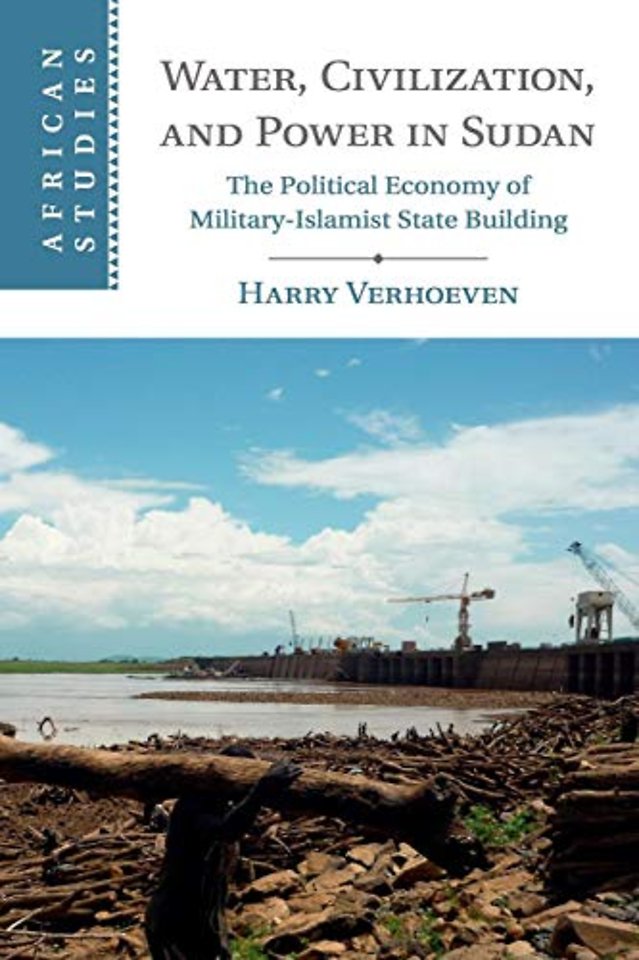
Water, Civilisation and Power in Sudan
The Political Economy of Military-Islamist State Building
Samenvatting
In 1989, a secretive movement of Islamists allied itself to a military cabal to violently take power in Africa's biggest country. Sudan's revolutionary regime was built on four pillars - a new politics, economic liberalisation, an Islamic revival, and a U-turn in foreign relations - and mixed militant conservatism with social engineering: a vision of authoritarian modernisation. Water and agricultural policy have been central to this state-building project. Going beyond the conventional lenses of famine, 'water wars' or the oil resource curse, Harry Verhoeven links environmental factors, development, and political power. Based on years of unique access to the Islamists, generals, and business elites at the core of the Al-Ingaz Revolution, Verhoeven tells the story of one of Africa's most ambitious state-building projects in the modern era - and how its gamble to instrumentalise water and agriculture to consolidate power is linked to twenty-first-century globalisation, Islamist ideology, and intensifying geopolitics of the Nile.
Specificaties
Inhoudsopgave
Vaak samen gekocht


Anderen die dit boek kochten, kochten ook
-
 Benjamin Rous€ 45,00
 -
F.A. Hayek€ 26,99
-
Kristof Bogaerts€ 22,99
-
Dan Brown€ 14,99
-
Will Gompertz€ 24,99
-
Ivan De Vadder€ 12,95





Rubrieken
- cadeauboeken
- computer en informatica
- economie
- filosofie
- flora en fauna
- geneeskunde
- geschiedenis
- gezondheid
- jeugd
- juridisch
- koken en eten
- kunst en cultuur
- literatuur en romans
- mens en maatschappij
- naslagwerken
- non-fictie informatief/professioneel
- paramedisch
- psychologie
- reizen
- religie
- schoolboeken
- spiritualiteit
- sport, hobby, lifestyle
- thrillers en spanning
- wetenschap en techniek
- woordenboeken en taal