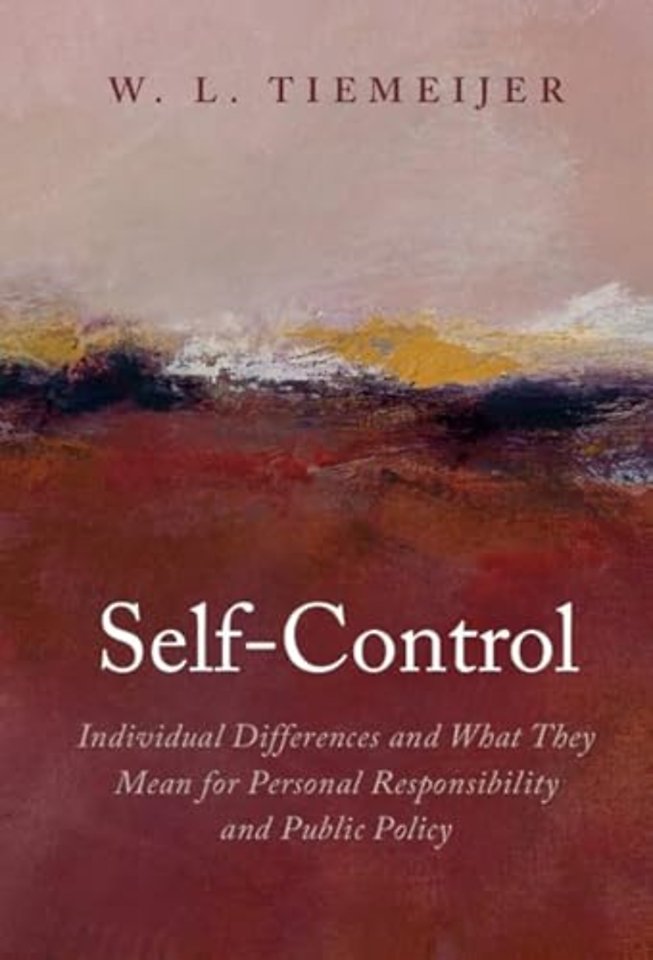
Self-Control
Individual Differences and What They Mean for Personal Responsibility and Public Policy
Samenvatting
Good self-control is a crucial factor in the distribution of life outcomes, ranging from success at school and work, to good mental and physical health, and to satisfying romantic relationships. While in the last decades psychologists have learned much about this all-important trait, both social theory and politics have not caught up. Many academics and policymakers still seem to believe that everybody has unlimited capacity for self-control and that maintaining discipline is purely a matter of volition. This book shows that such beliefs are fundamentally mistaken. It presents the state-of-the-art in research on self-control, explains why this trait has been largely overlooked, and sets out the profound implications of this psychological research for moral responsibility, distributive justice and public policy. It shows that the growing emphasis in politics on 'personal responsibility' is deeply problematic, and outlines alternatives more in accord with human psychology.
Specificaties
Inhoudsopgave
Anderen die dit boek kochten, kochten ook
-
 Genieke Hertoghs€ 34,50
 -
Gert Biesta€ 13,99
-
Boaz Bijleveld€ 27,95
-
Harm Oosterhuis€ 20,00
-
Jitske Kramer€ 27,50
-
Philip J. Idenburg€ 29,95





Rubrieken
- cadeauboeken
- computer en informatica
- economie
- filosofie
- flora en fauna
- geneeskunde
- geschiedenis
- gezondheid
- jeugd
- juridisch
- koken en eten
- kunst en cultuur
- literatuur en romans
- mens en maatschappij
- naslagwerken
- non-fictie informatief/professioneel
- paramedisch
- psychologie
- reizen
- religie
- schoolboeken
- spiritualiteit
- sport, hobby, lifestyle
- thrillers en spanning
- wetenschap en techniek
- woordenboeken en taal